Hiring
How to Prepare Your UX Case Study for a Design Interview
Turn your UX case study into an interview-ready narrative that helps you explain your role, decisions, process, and learnings.

Ömer Arı
4 min read

The real problem
A case study is not only a portfolio page. It is also interview preparation. When a reviewer opens your case study, they start forming questions. A strong case study anticipates those questions and gives you a clearer way to talk through your work.
This becomes a problem in the interview room specifically. When the reasoning is not on the page, the interviewer has to probe for it. That puts you in a reactive position, answering questions about gaps rather than guiding the conversation through your thinking. A case study that makes the reasoning visible gives you a cleaner path through the presentation.
What to focus on instead
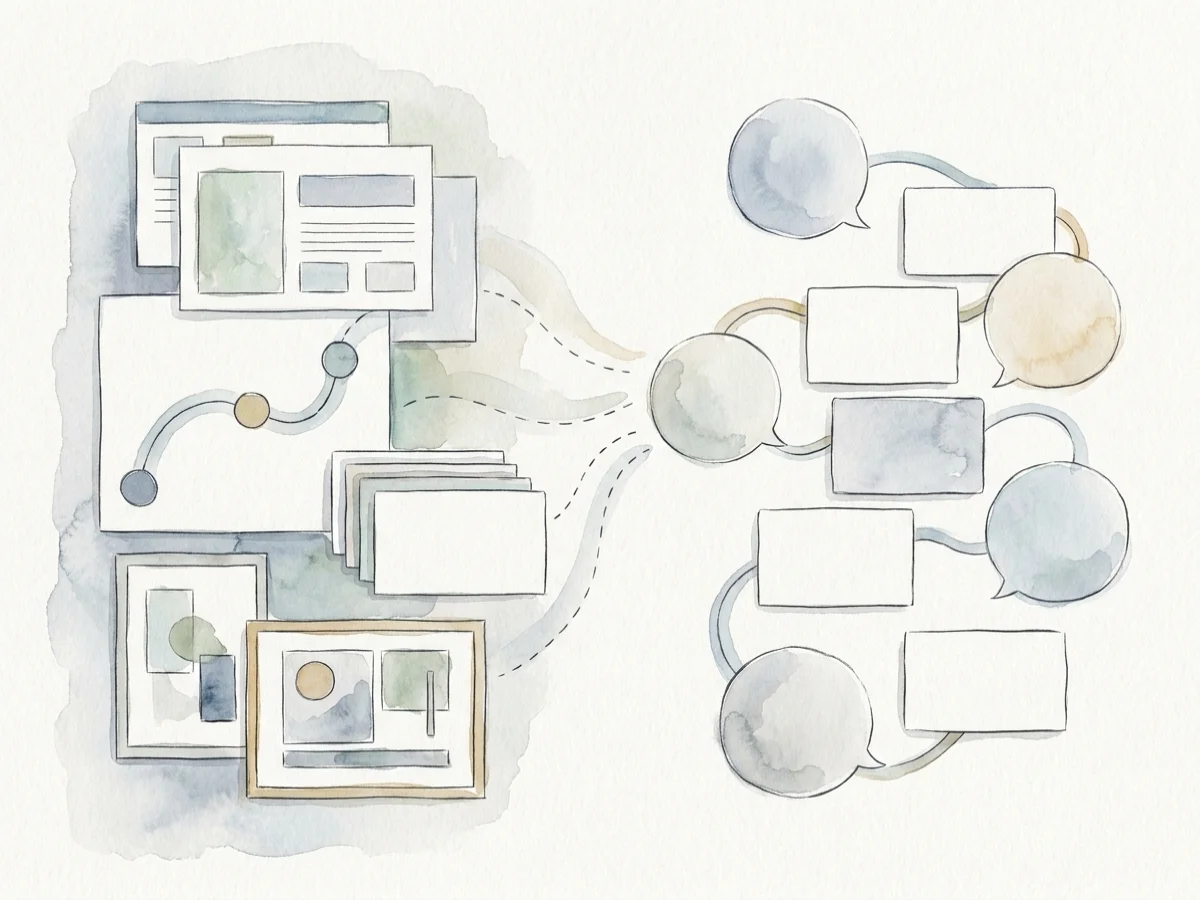
The interview version of your case study has a different job than the portfolio version. The portfolio needs to earn attention in the first 30 seconds. The interview version needs to hold a 15-minute conversation. For that to work, you need to know exactly which decisions you would defend under pressure, and which trade-offs you can explain clearly out loud.
Key principles:
- Prepare a two-minute summary of the project.
- Know your role and contribution clearly.
- Explain one important trade-off.
- Prepare one decision you would defend.
- Prepare one thing you would improve today.
A practical structure
Use this simple flow:
- Context: Can you describe the product and team in two sentences?
- Problem: Can you state the core problem without jargon?
- Role: Can you explain your specific contribution without defaulting to “we”?
- Decision: Which decisions are you prepared to defend in detail?
- Reasoning: Can you explain the evidence or trade-off behind each key choice?
- Outcome: What changed, and are you confident enough in that claim to be challenged on it?
This doubles as an interview outline. If you can answer all six points out loud, you have a stable scaffold for the presentation. The questions that come after will almost always land on one of these six points. Knowing where in the framework they land helps you answer without losing the thread.
Example framing
Weak framing:
I redesigned the flow and improved the user experience.
Stronger framing:
I focused on the onboarding step where users were unsure what to do next. Instead of adding more explanation, I simplified the sequence and made the next action more visible. This helped the team align around a clearer first-use experience.
The stronger framing holds up when an interviewer asks a follow-up. If you can name the specific decision and the reasoning behind it, the conversation stays grounded. If you have only a general outcome claim to offer, any follow-up question will surface the gap.
What to avoid
- Do not turn the case study into a gallery of screens.
- Do not hide your role behind vague “we” language.
- Do not overclaim impact if you do not have evidence.
- Do not describe every step equally; highlight the decisions that mattered.
- Do not copy another designer’s case study structure without adapting it to your own project.
Final thought
The case study that works in a design interview is the one you can actually talk through. If you can explain the situation, describe the decision, name the trade-off, and say what changed, that case study will carry the conversation. The portfolio page is just the entry point.
More case study guides
This article was created in collaboration with AI · Editor: Ömer Arı
Related reading
Jan 29, 2026
4min read
What Hiring Managers Look for in UX Case Studies
Understand what design leads and hiring teams notice when reviewing UX case studies, from role clarity to trade-offs and outcomes.
Apr 29, 2026
2min read
How to Turn Portfolio Rejection Into Better Case Studies
Learn how to use portfolio rejection, recruiter silence, and interview feedback as signals to improve your UX case studies.
Apr 9, 2026
3min read
How to Write an English UX Case Study for Global Job Applications
Learn how to write a clear English UX case study for international applications without sounding overly complex or generic.