Case studies
Before and After UX Case Study Rewrite Examples
Review before and after UX case study rewrite examples that improve problem framing, role clarity, research, and design decisions.

Ömer Arı
3 min read
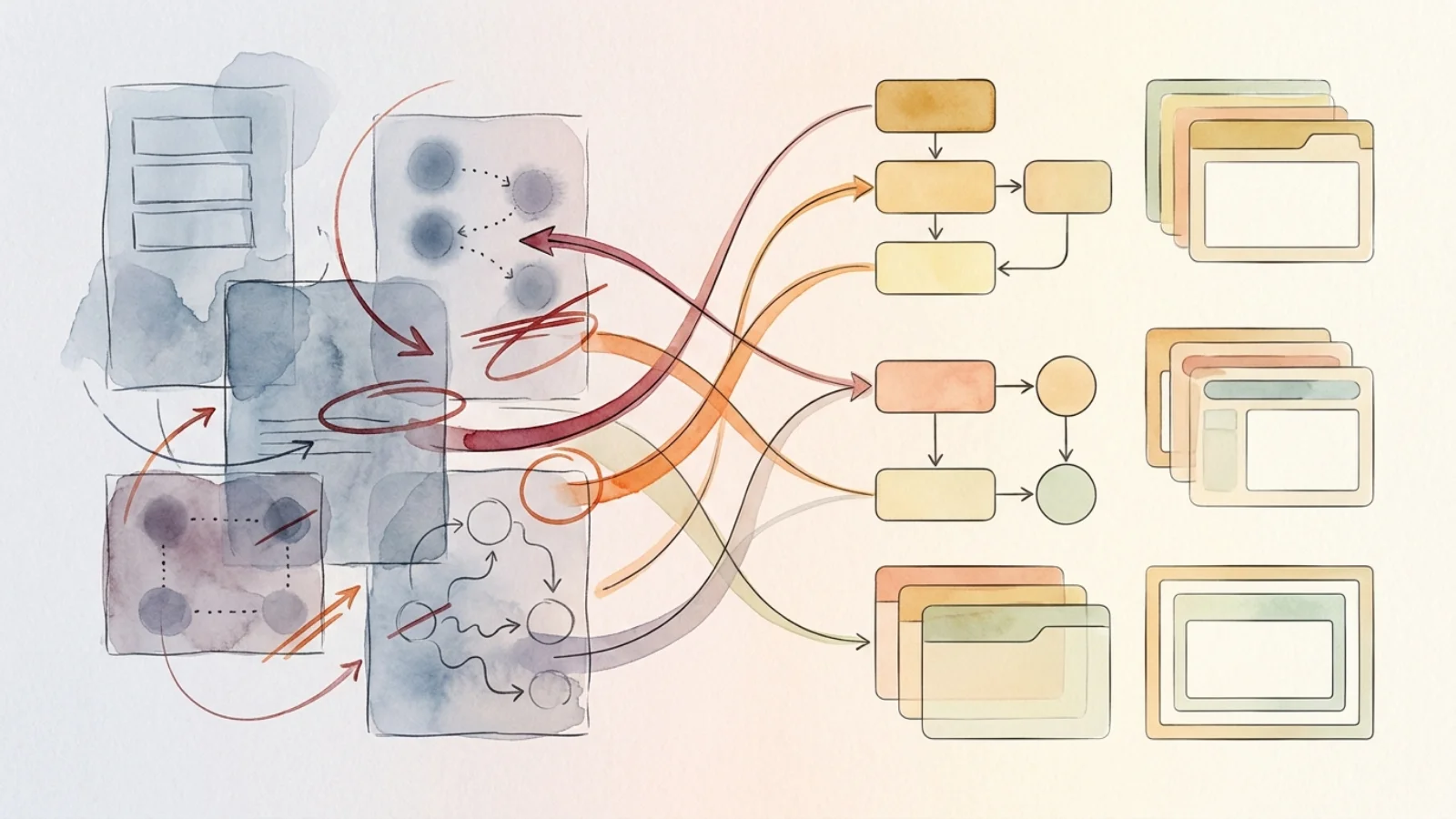
A case study often needs less rewriting than people think. The problem is usually not every paragraph. It is a few vague moments where the reader cannot see the decision behind the work. Before and after examples make those moments easier to spot.
Example 1: Problem framing
Before: “Users needed a better way to manage their subscriptions.” After: “Freelancers were losing track of recurring software costs because invoices, renewal dates, and cancellation rules lived in separate tools. The design challenge was to make upcoming charges visible before they became unexpected expenses.” The after version gives user group, situation, friction, and consequence.
Example 2: Research summary
Before: “I interviewed users and found several pain points.” After: “Three of five participants checked renewal dates only after seeing a charge. That changed the design priority from monthly budgeting to earlier renewal awareness.” The after version connects research to a design priority.
Example 3: Role clarity
Before: “We redesigned the onboarding flow.” After: “I owned the onboarding information architecture and prototype. A product manager defined activation goals, and another designer reviewed UI consistency before handoff.” This is more credible because it does not blur the team contribution.
Example 4: Design decision
Before: “I made the checkout flow simpler.” After: “I removed the optional promo step from the main path because test participants treated it as required and paused before payment. The option moved below the order summary.” The after version is specific and evaluable.
Example 5: Impact
Before: “The final design improved the experience.” After: “In the second test round, participants completed the setup without asking where to find shipping rules. I would still want to validate the flow with sellers who manage more than twenty listings.” This avoids a fake metric and still shows progress.
How to apply this to your own case study
Find five sentences that sound polished but vague. For each one, ask what actually happened. Which user? Which moment? Which decision? Which evidence? Which constraint? You do not need to make the writing more dramatic. You need to make it more traceable.
Frequently Asked Questions
Should I rewrite my whole case study? Usually no. Start with the places where the reader cannot see the decision.
Can before and after examples be used in a portfolio? Yes, when they are concise and help explain your reasoning.
What makes an after version stronger? It names context, evidence, and the design change more clearly.
Should I include messy details? Include the details that explain judgment. Leave out noise that does not affect the decision.
Can AI help with rewrites? It can help find vague sections, but you should provide the real project context and final wording.
This article was created in collaboration with AI · Editor: Ömer Arı
Related reading
May 8, 2026
10min read
How to Show Information Architecture in a UX Portfolio
How to present information architecture decisions in a portfolio through user needs, content grouping, and navigation reasoning.
May 6, 2026
9min read
How to Explain Prototyping in a UX Case Study
How to present prototypes in a UX case study through assumptions, interaction decisions, test scenarios, and learning.
May 5, 2026
10min read
How to Show a Journey Map in a UX Case Study
How to connect a journey map to user problems, friction points, and design decisions in a UX case study.